Nutrition
Caffeine and cortisol in perimenopause
12 September 2026 · By Dr. B.J. Huber · 16 min read
Coffee is being hyped again. On social media you read how healthy it is, how it extends life and supports the metabolism. A lot of that is even true. And yet you may notice that your coffee hits differently than it used to. Your heart beats faster, your sleep suffers, you feel restless in the afternoon even though you have changed nothing. Do you recognise this?
There is a biological reason for it. Caffeine drives your stress hormone cortisol up, and in perimenopause you clear caffeine more slowly than before. The same cup then acts stronger and lasts longer. The posts about healthy coffee rarely mention this side. They talk about averages, not about your body in this stage of life.
This article looks at what the research really shows about coffee and health, what caffeine does to cortisol, why the hormonal shift in perimenopause changes its effect, and how to use your coffee so that it helps rather than harms.
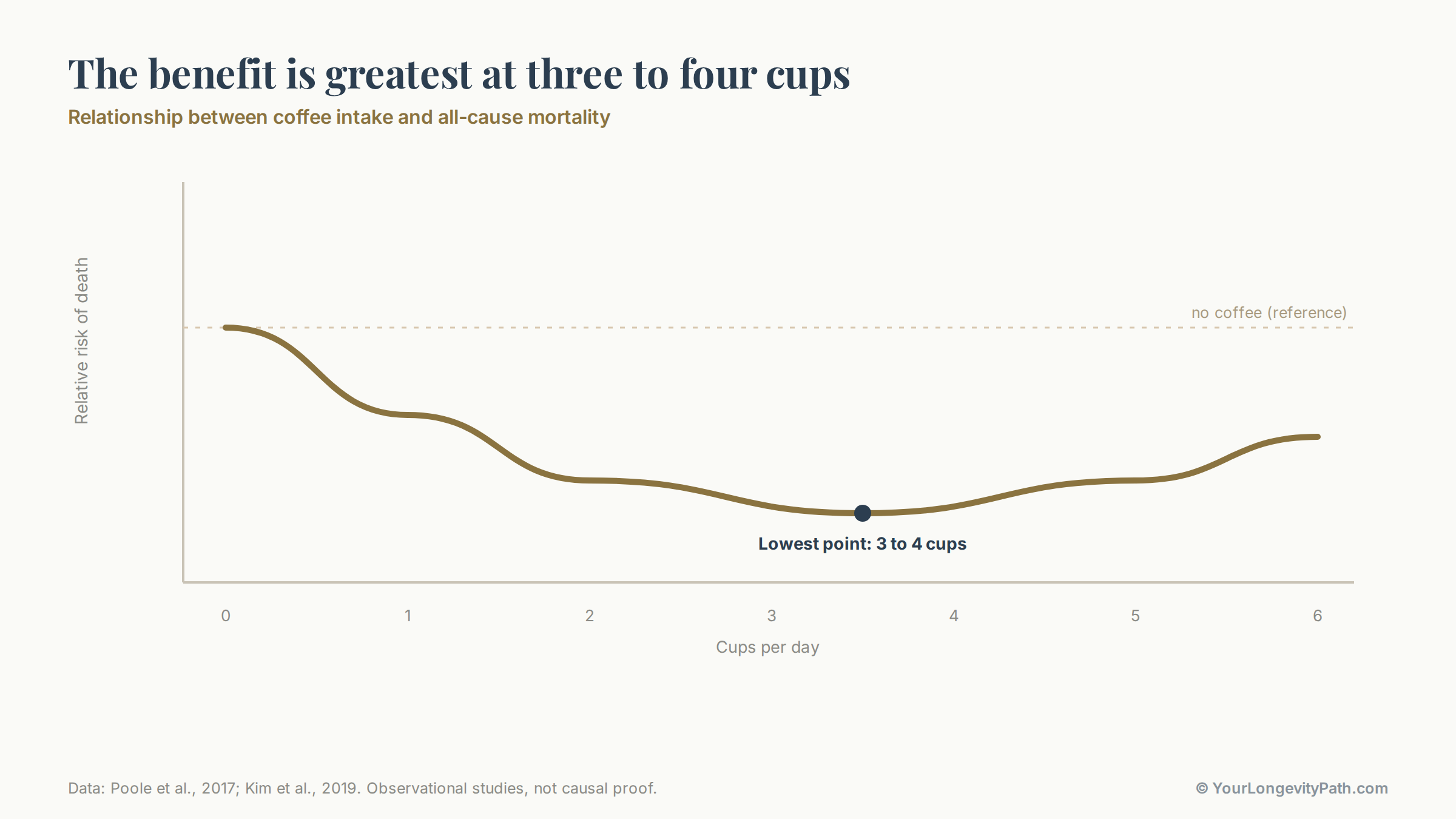 Fig. 1: Relationship between coffee intake and all-cause mortality in observational studies. The lowest point is at three to four cups.1,2
- Moderate coffee intake is linked to benefits: three to four cups go with roughly 17 per cent lower all-cause mortality.1 This is observational data, not proof.
- Caffeine raises cortisol, and habitual intake can heighten the stress response rather than blunt it.6
- In perimenopause, the swinging oestrogen slows caffeine breakdown in the liver.9 Caffeine acts longer, with more restlessness and worse sleep.
Is coffee healthy or not?
For most people, moderate intake brings more benefit than harm. In a large umbrella review of hundreds of analyses, people drinking three to four cups a day had the lowest all-cause mortality, about 17 per cent lower than people drinking no coffee.1 So the hype has a real kernel.
The numbers carry weight because they come from very large groups. A dose-response analysis found the lowest point at 3.5 cups a day.2 Type 2 diabetes shows a similar picture. In an analysis of more than a million people, the risk fell by about 9 per cent with each additional cup.3 For the liver, cardiovascular disease and some cancers the data also point to lower risk. On top of that comes a finding that has only recently been studied: coffee changes the composition of the gut microbiome. More on that below.
One limitation is almost never mentioned. All of this is observational. It shows an association, not a cause. People who tolerate a lot of coffee may be healthier or sleep better to begin with. And averages apply to large groups, not to you on a given day. Two things help decide whether coffee is good for you: what it does to your cortisol, and how fast you clear it.
What does caffeine do to your cortisol?
Caffeine works by blocking the body’s own sleepiness signal. Over the day the messenger adenosine builds up in the brain and makes you drowsy. Caffeine occupies its docking sites and keeps you awake.4 The same activation also stimulates the stress axis, and cortisol rises.
How strongly depends on the dose and on habituation. In a controlled study, participants took 0, 300 or 600 milligrams of caffeine a day for five days. A test dose of 250 milligrams then followed at 9am, 1pm and 6pm, each about two to three cups. After a caffeine break, cortisol rose clearly across the whole day. With daily intake, the 9am rise had disappeared completely, while in the afternoon and early evening cortisol still rose.5 The research group summed it up like this: the response is reduced, but not abolished.
From this follows something that is often misunderstood. The morning rise itself is driven by the internal clock and happens even without coffee. Caffeine adds its effect on top, and in the morning this add-on is small because cortisol is already near its peak. In the afternoon, when the level is low, the same cup weighs more. That is why the afternoon coffee matters more for the daily curve than the morning coffee.
So coffee does not push your own morning rise down. Anyone who cannot get going without the first cup is mainly feeling the adenosine that built up overnight and the caffeine withdrawal. The morning cortisol rise happens even without coffee. The popular advice to have your first coffee ninety minutes after waking, so as not to dampen the natural rise, has no solid basis for that reasoning. If it helps you through the morning, keep it, but the cortisol argument does not hold.
The long-standing view was: if you drink regularly, you get used to it, so no problem. A 2024 study challenges that. In two independent groups, the cortisol rise under stress was stronger in regular caffeine users, not weaker.6 In heavy drinkers, caffeine might therefore heighten the stress response rather than blunt it. For context: a smaller study in the same year found no such difference.7 The question is not settled, but the assumption that you simply get used to it falls short.
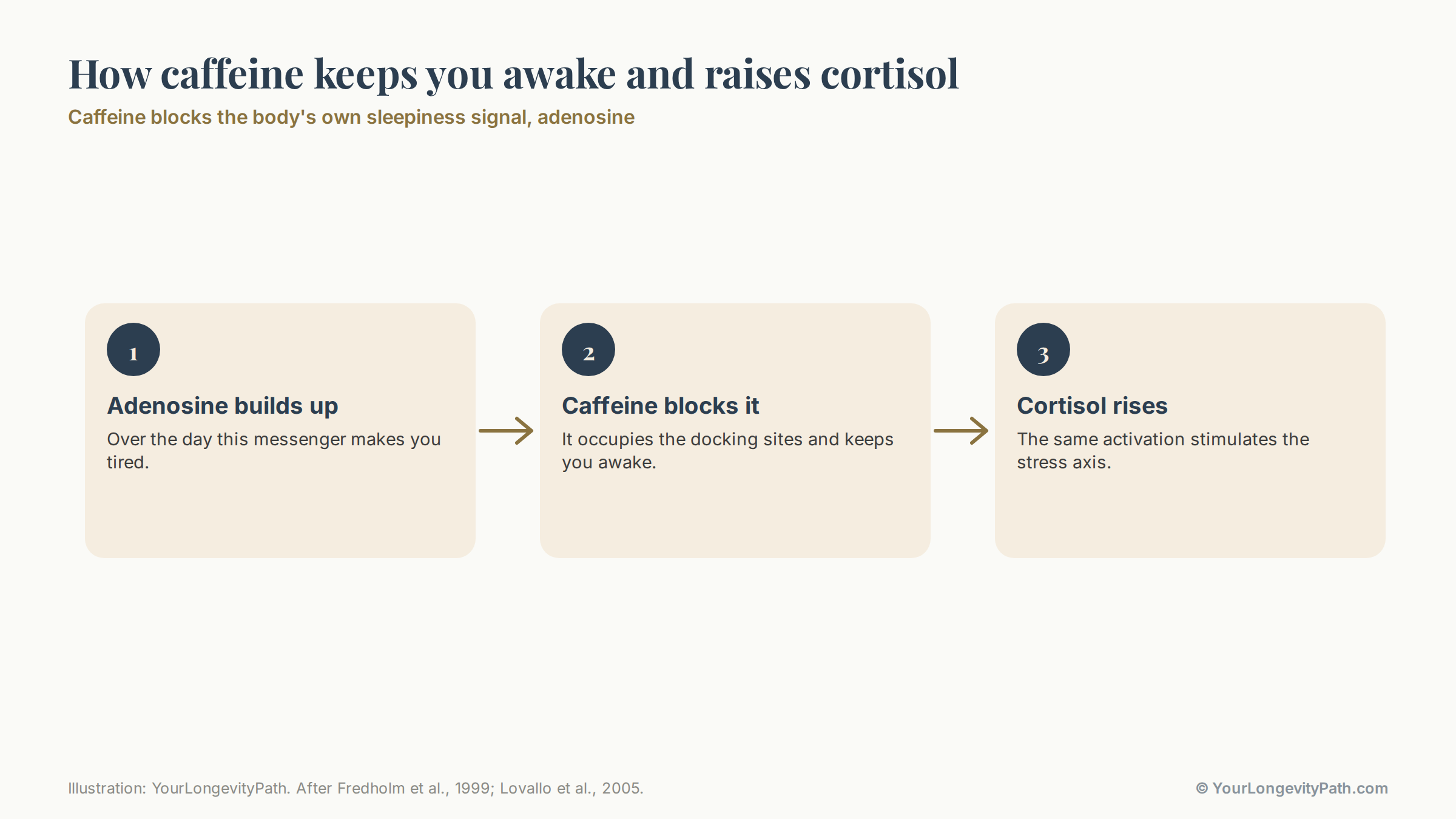 Fig. 2: How caffeine keeps you awake by blocking adenosine and raises cortisol in the process.4,5
Why do you clear caffeine more slowly in perimenopause?
Because oestrogen slows the breakdown of caffeine. Caffeine is broken down in the liver by an enzyme called CYP1A2. Oestrogen throttles this enzyme. When oestrogen is high, caffeine stays in the body longer and acts stronger.
This is clearest with the contraceptive pill and in pregnancy. On the pill, caffeine stays in the body about twice as long.8 By the end of pregnancy this nearly triples.9 The same cup then acts much longer, because the body barely breaks the caffeine down.
In perimenopause, oestrogen swings strongly, and there are repeated phases with high levels. In those phases caffeine can act noticeably longer than at 25. On top of this comes genetic predisposition. Through the same enzyme CYP1A2 there are naturally fast and slow metabolisers. Slow metabolisers react more sensitively, and in them a high coffee intake was linked to a higher heart-attack risk in a large study, but not in fast metabolisers.10
In practice this means there is no coffee amount that fits everyone. If you notice that the same cup now makes you shakier, sets off your heart or disturbs your sleep, that is not your imagination. It may be because you are currently clearing caffeine more slowly.
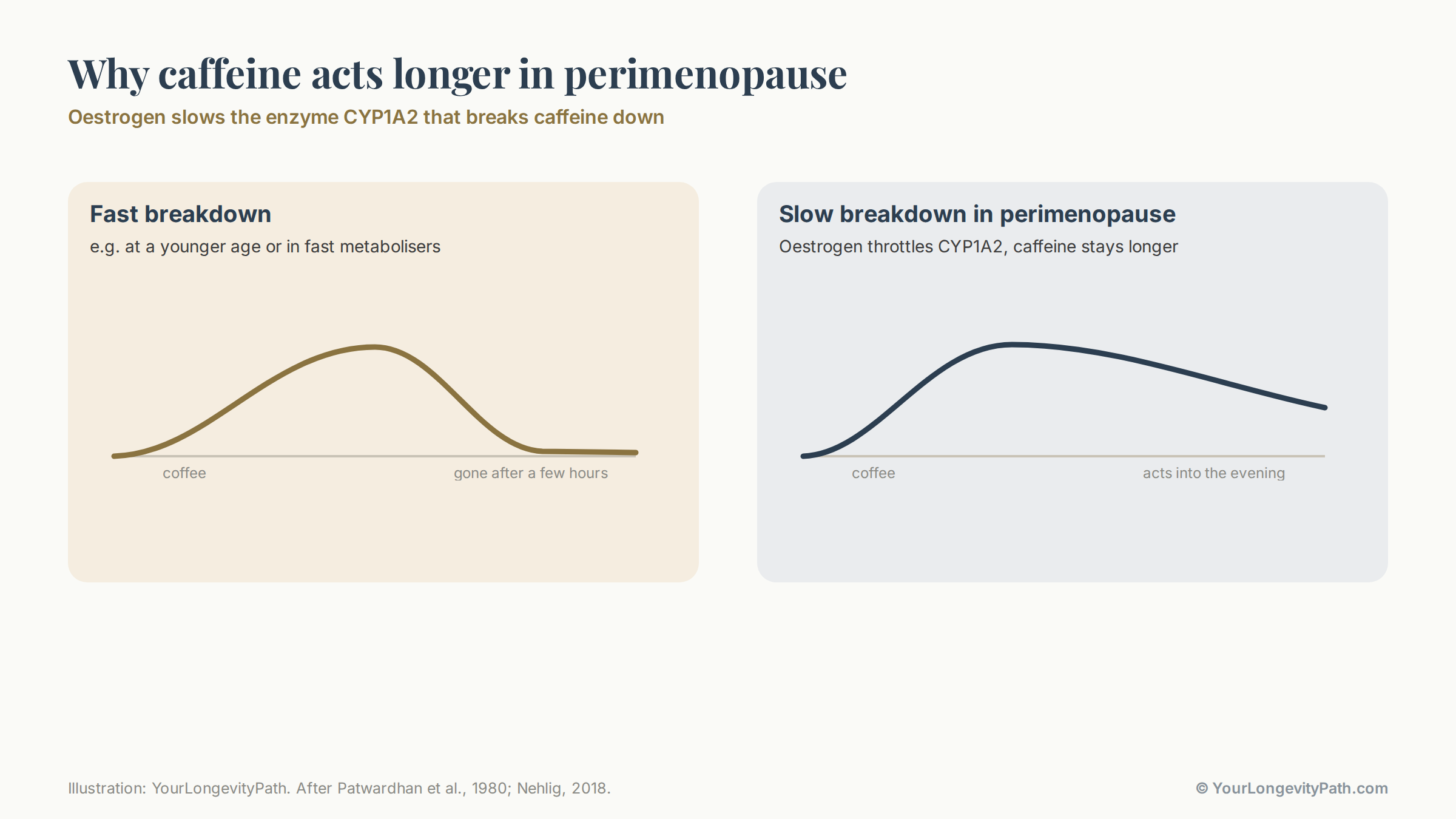 Fig. 3: Oestrogen slows the enzyme CYP1A2 that breaks caffeine down. The same amount therefore acts longer.8,9
How is coffee linked to hot flushes and sleep?
In perimenopause the two reinforce each other. Caffeine activates the nervous system, and an activated nervous system is exactly what favours hot flushes and poor sleep. In a survey at a menopause clinic, the data of 1,806 women were analysed. In the women past menopause, caffeine intake went with more bothersome hot flushes and night sweats. For the women in perimenopause this did not hold. In them, caffeine was linked to fewer problems with mood, memory and concentration.11
The difference was small, and the study surveyed all participants at a single point in time. It therefore shows an association, not a cause. The mechanism is plausible, since caffeine stimulates circulation and the stress axis, and both play a part in heat regulation. Anyone who suffers badly from flushes in perimenopause can still keep an eye on their own coffee. But there is no evidence that caffeine worsens flushes in this phase.
With sleep the picture is clearer. Caffeine acts longer than many think. In a controlled study, a dose of 400 milligrams disturbed sleep measurably, even when taken six hours before bedtime.12 So if you have your last coffee at 4pm, you still have relevant amounts in your body at 10pm. In perimenopause two things come together. Clearance runs more slowly, and sleep is more easily disturbed anyway because of the drop in progesterone. And too high a caffeine level in the evening also keeps cortisol up, which should be falling at night. How the cortisol rhythm shifts in this phase, I describe in a separate article.
What does coffee do to the gut microbiome?
This branch of research is young, and the findings are surprisingly clear.
An analysis of 22,867 people, supplemented by data from 211 further studies with more than 54,000 participants in total, found one microbe especially closely linked to coffee: Lawsonibacter asaccharolyticus. In people with a high coffee intake it was four to eight times more common than in people who never drink coffee, and that across different countries and groups.13 Decaffeinated coffee showed the same association. Caffeine alone therefore does not explain the effect, the plant compounds in coffee play a part.
A study from May 2026 went a step further and looked at what changes in the body. 31 coffee drinkers were compared with 31 people who drink no coffee. The coffee group then abstained completely for 14 days and afterwards took up either regular or decaffeinated coffee again for 21 days.14
In the coffee drinkers there was more Cryptobacterium curtum and several Eggerthella species, and less Veillonella parvula and Haemophilus parainfluenzae. More interesting than the names are the substances that ended up in the blood: coffee drinkers had less indole-3-propionic acid, less indole-3-carboxaldehyde and less GABA.
The last point is the most relevant for this stage of life. GABA is the calming messenger in the nervous system, and progesterone, which drops first in perimenopause, works through exactly this path. When both come together, it explains part of why winding down in the evening is harder than it used to be.
Some perspective belongs here too: the study is small and shows differences between two groups, not a cause. The coffee drinkers also stood out through more impulsivity and stronger emotional reactivity, while the non-drinkers did better in memory tests. Whether the coffee causes that, or whether more impulsive people simply drink more coffee, this study cannot answer.
How much coffee fits in perimenopause?
There is no single number that fits everyone, and that is the most important message. The studies on benefit talk about three to four cups on average. Whether that fits you depends on how fast you clear caffeine, how you sleep and how your nervous system is reacting at the moment. The following points help you find your own frame.
1. Watch your own response. Shakiness, palpitations, inner restlessness and poor sleep are signs that the amount is currently too high. They say more than any general recommendation. When these signs are new, it is often a hint of the slower clearance in this phase.
2. Keep caffeine to early in the day. Because caffeine keeps working for six hours and more, the timing matters more than the amount. The last caffeinated coffee should be drunk in the early afternoon, so that cortisol can fall in the evening and sleep does not suffer. How sleep changes in perimenopause, you can read in a separate article.
3. Smaller amounts on worse days. In phases with lots of flushes, little sleep or a lot of stress, it pays to drink a cup or two less. The body often clears more slowly in such phases, and the usual amount then acts more strongly.
4. Not on an empty stomach and not as a breakfast substitute. Coffee with a protein-rich meal burdens blood sugar less than coffee alone. Steadier blood sugar in turn keeps cortisol more stable.
5. Decaf is a good option. Anyone who loves the taste and the ritual but sleeps badly or reacts strongly to caffeine can switch to decaffeinated coffee in the afternoon. The polyphenols in coffee are largely preserved.
6. No guilt about the morning coffee. In the morning cortisol is high anyway, and the body usually tolerates caffeine well then. That way coffee can be used deliberately, instead of cutting it out entirely.
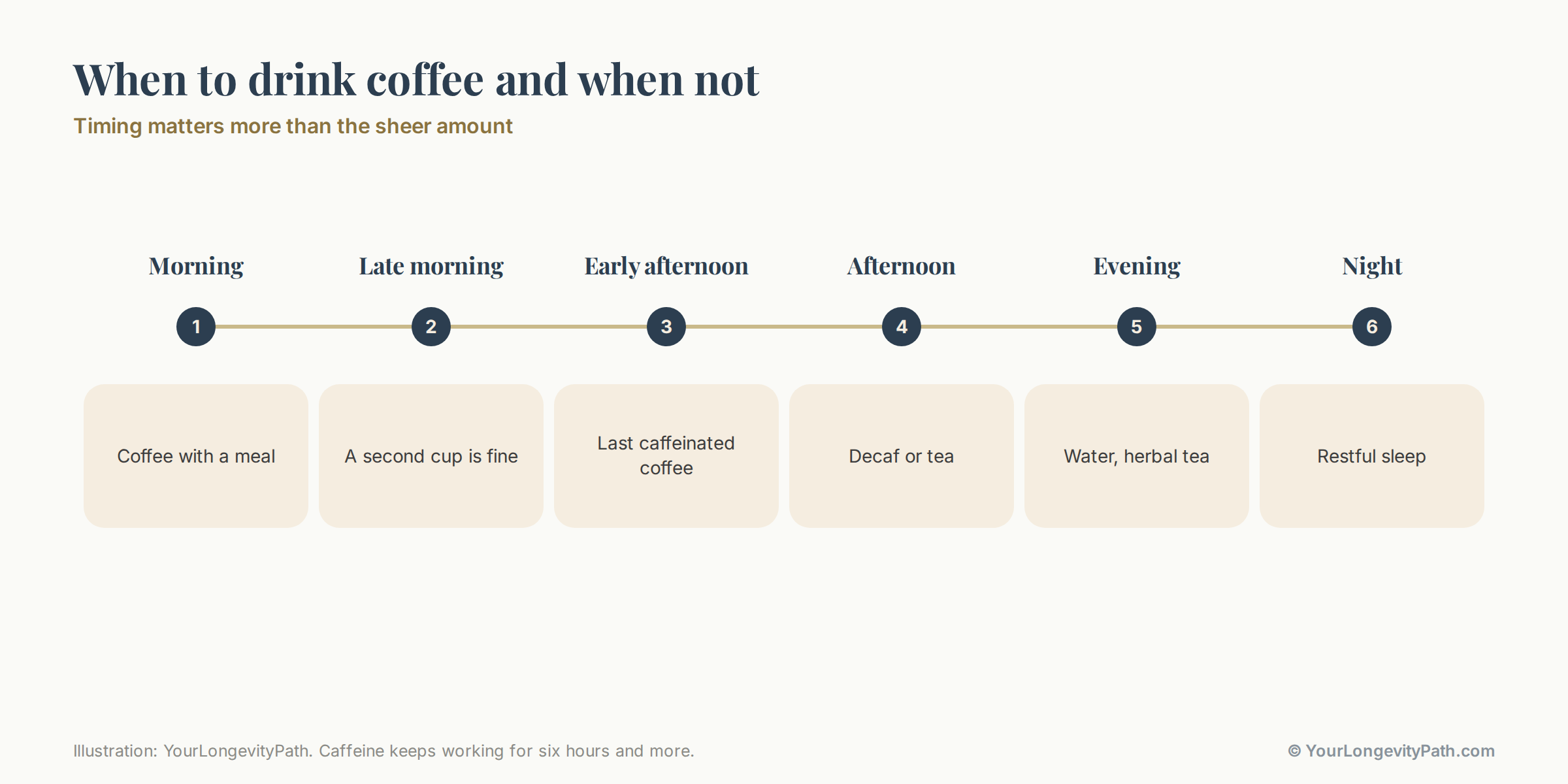 Fig. 4: When to drink coffee and when not. Timing matters more than the sheer amount.
Why quitting often takes longer than expected
Caffeine blocks the docking sites for adenosine. The brain compensates by making more of them. When the caffeine falls away, the same amount of adenosine meets far more docking sites, and the tiredness hits accordingly.
How long that lasts is well studied. Symptoms start 12 to 24 hours after the last dose, peak at 20 to 51 hours and last 2 to 9 days. Half of people get headaches, and in 13 per cent the impairment disrupts daily life. As little as 100 milligrams a day, about one cup, is enough for withdrawal to occur.15
Many people still report weeks. There are three explanations for that, and none of them is the withdrawal itself.
Anyone who has a cup in between starts over. That then feels like a withdrawal dragging on for months.
Coffee also structures the morning, the break, the chat with a colleague. That gap has nothing to do with adenosine and does not close on its own.
The most common is the third reason. The coffee was covering something up. Anyone who has functioned on four cups for years often does not notice how tired they really are. Without coffee the actual state shows itself, and it does not change by waiting longer. Behind it usually sit lack of sleep, low ferritin, the thyroid or, in this stage of life, the fragmented sleep from the drop in progesterone.
Anyone who is still not getting going after four weeks without coffee therefore rarely has a caffeine problem. The coffee was the compensation, the cause lies elsewhere. Which blood markers give insight in this phase, I describe in a separate article.
Where to go from here
Coffee is not the enemy. For most people, moderate intake is linked to benefits, and the morning coffee is rarely the problem. It comes down to amount, timing and how well you are currently clearing caffeine. And the last of these changes in perimenopause.
If you notice that your coffee hits differently than before, it pays to adjust the timing and the amount first, before you change anything else. The biggest difference often comes simply from having the last coffee earlier.
If you want to make sense of your bigger picture across hormones, sleep, cortisol and nutrition, that is my work. In my hormone coaching for perimenopause we look at which starting points fit your daily life, always within what coaching can do and what belongs in medical hands. A free initial consultation is the simplest start. It is without obligation and takes place online.
Scientific sources
-
Poole, R., Kennedy, O. J., Roderick, P., Fallowfield, J. A., Hayes, P. C., & Parkes, J. (2017). Coffee consumption and health: umbrella review of meta-analyses of multiple health outcomes. BMJ, 359, j5024. doi: 10.1136/bmj.j5024
-
Kim, Y., Je, Y., & Giovannucci, E. (2019). Coffee consumption and all-cause and cause-specific mortality: a meta-analysis by potential modifiers. European Journal of Epidemiology, 34(8), 731–752. doi: 10.1007/s10654-019-00524-3
-
Ding, M., Bhupathiraju, S. N., Chen, M., van Dam, R. M., & Hu, F. B. (2014). Caffeinated and decaffeinated coffee consumption and risk of type 2 diabetes: a systematic review and a dose-response meta-analysis. Diabetes Care, 37(2), 569–586. doi: 10.2337/dc13-1203
-
Fredholm, B. B., Bättig, K., Holmén, J., Nehlig, A., & Zvartau, E. E. (1999). Actions of caffeine in the brain with special reference to factors that contribute to its widespread use. Pharmacological Reviews, 51(1), 83–133. PMID: 10049999
-
Lovallo, W. R., Whitsett, T. L., al’Absi, M., Sung, B. H., Vincent, A. S., & Wilson, M. F. (2005). Caffeine stimulation of cortisol secretion across the waking hours in relation to caffeine intake levels. Psychosomatic Medicine, 67(5), 734–739. doi: 10.1097/01.psy.0000181270.20036.06
-
Cole, E. L., Grillo, A. R., & Vrshek-Schallhorn, S. (2024). Habitual caffeine use is associated with heightened cortisol reactivity to lab-based stress in two samples. Psychosomatic Medicine, 86(8), 730–737. doi: 10.1097/PSY.0000000000001334
-
Ueno, M. (2024). No significant difference in salivary cortisol response on the Trier Social Stress Test-Online based on coffee consumption habits. BMC Psychology, 12(1), 483. doi: 10.1186/s40359-024-01968-3
-
Patwardhan, R. V., Desmond, P. V., Johnson, R. F., & Schenker, S. (1980). Impaired elimination of caffeine by oral contraceptive steroids. Journal of Laboratory and Clinical Medicine, 95(4), 603–608. PMID: 7359014
-
Nehlig, A. (2018). Interindividual differences in caffeine metabolism and factors driving caffeine consumption. Pharmacological Reviews, 70(2), 384–411. doi: 10.1124/pr.117.014407
-
Cornelis, M. C., El-Sohemy, A., Kabagambe, E. K., & Campos, H. (2006). Coffee, CYP1A2 genotype, and risk of myocardial infarction. JAMA, 295(10), 1135–1141. doi: 10.1001/jama.295.10.1135
-
Faubion, S. S., Sood, R., Thielen, J. M., & Shuster, L. T. (2015). Caffeine and menopausal symptoms: what is the association? Menopause, 22(2), 155–158. doi: 10.1097/GME.0000000000000301
-
Drake, C., Roehrs, T., Shambroom, J., & Roth, T. (2013). Caffeine effects on sleep taken 0, 3, or 6 hours before going to bed. Journal of Clinical Sleep Medicine, 9(11), 1195–1200. doi: 10.5664/jcsm.3170
-
Manghi, P., Bhosle, A., Wang, K., et al. (2024). Coffee consumption is associated with intestinal Lawsonibacter asaccharolyticus abundance and prevalence across multiple cohorts. Nature Microbiology, 9, 3120–3134. doi: 10.1038/s41564-024-01858-9
-
Boscaini, S., Bastiaanssen, T. F. S., Moloney, G. M., et al. (2026). Habitual coffee intake shapes the gut microbiome and modifies host physiology and cognition. Nature Communications, 17(1), 3439. doi: 10.1038/s41467-026-71264-8
-
Juliano, L. M., & Griffiths, R. R. (2004). A critical review of caffeine withdrawal: empirical validation of symptoms and signs, incidence, severity, and associated features. Psychopharmacology, 176(1), 1–29. doi: 10.1007/s00213-004-2000-x
Is coffee healthy or harmful?
For most people, moderate intake brings more benefit than harm. Three to four cups are linked to lower mortality in large analyses (Poole et al., 2017). What matters is the amount, the timing and how fast you personally clear caffeine.
Why does caffeine hit harder in perimenopause?
Caffeine is broken down by the liver enzyme CYP1A2, and oestrogen slows this enzyme. When hormone levels swing, caffeine can act longer and stronger than before, with more restlessness and worse sleep.
How long does caffeine withdrawal last?
Symptoms start 12 to 24 hours after the last dose, peak at 20 to 51 hours and last 2 to 9 days (Juliano and Griffiths, 2004). If you are still exhausted after several weeks, the problem is usually no longer caffeine but a cause underneath it, such as lack of sleep, low ferritin or the thyroid.
How much coffee is okay in perimenopause?
There is no single number that fits everyone. Many women do well with one to three cups in the morning. More important than the amount is stopping caffeine in the early afternoon and paying attention to your own response.
This article is for informational purposes only and does not replace professional medical advice, diagnosis, or treatment. If you have health concerns, please consult a qualified healthcare professional.