Nutrition
How Does Olive Oil Affect Your Hormones?
6 July 2026 · By Dr. B.J. Huber · 9 min read
A Mediterranean holiday, wonderfully fresh food, and what can’t be missing? A good drizzle of olive oil. Over the vegetables, in the salad, on the bread. And after a few days I feel really good. The scientist in me asks straight away: is it the oil, or am I imagining it?
To a surprisingly large extent it is the oil, and the Mediterranean way of eating it belongs to. But there is also a lot of “miracle oil” marketing around olive oil. This article separates the two: what good olive oil can really do, what matters in perimenopause, and how to tell whether you even have the right oil in your hand.
- Heart: In the large PREDIMED study, a Mediterranean diet with extra virgin olive oil lowered heart attacks and strokes by around 31 percent (Estruch et al., 2018).
- Inflammation: Its compound oleocanthal inhibits the same inflammatory enzymes as ibuprofen (Beauchamp et al., 2005), in a gentle everyday dose.
- Blood sugar: Extra virgin olive oil with a meal clearly dampens the blood sugar rise afterwards (Violi et al., 2015), which matters given the rising insulin resistance in perimenopause.
- Mood: A Mediterranean diet can reduce depressive symptoms (Jacka et al., 2017). Olive oil is an important part of it, but not the only one.
- Quality: Only extra virgin olive oil contains the valuable polyphenols. You recognize them by the slightly scratchy, peppery burn in the throat.
Olive Oil Is More Than a Healthy Fat
That olive oil is healthier than most other cooking oils is well known. The more interesting question is how large the effect is.
The answer comes from one of the largest nutrition studies ever: PREDIMED. Over 7,000 people at high cardiovascular risk were followed for nearly five years. Those who ate a Mediterranean diet and used plenty of extra virgin olive oil had around 31 percent fewer heart attacks, strokes, and cardiovascular deaths than the low-fat comparison group (Estruch et al., 2018). That is not a small effect, it is a magnitude many medications can only dream of.
For perimenopause this matters especially. As long as estrogen is high, it helps protect the blood vessels. When it drops, cardiovascular risk genuinely rises. Extra virgin olive oil acts exactly there: on the heart, on inflammation, and on blood sugar.
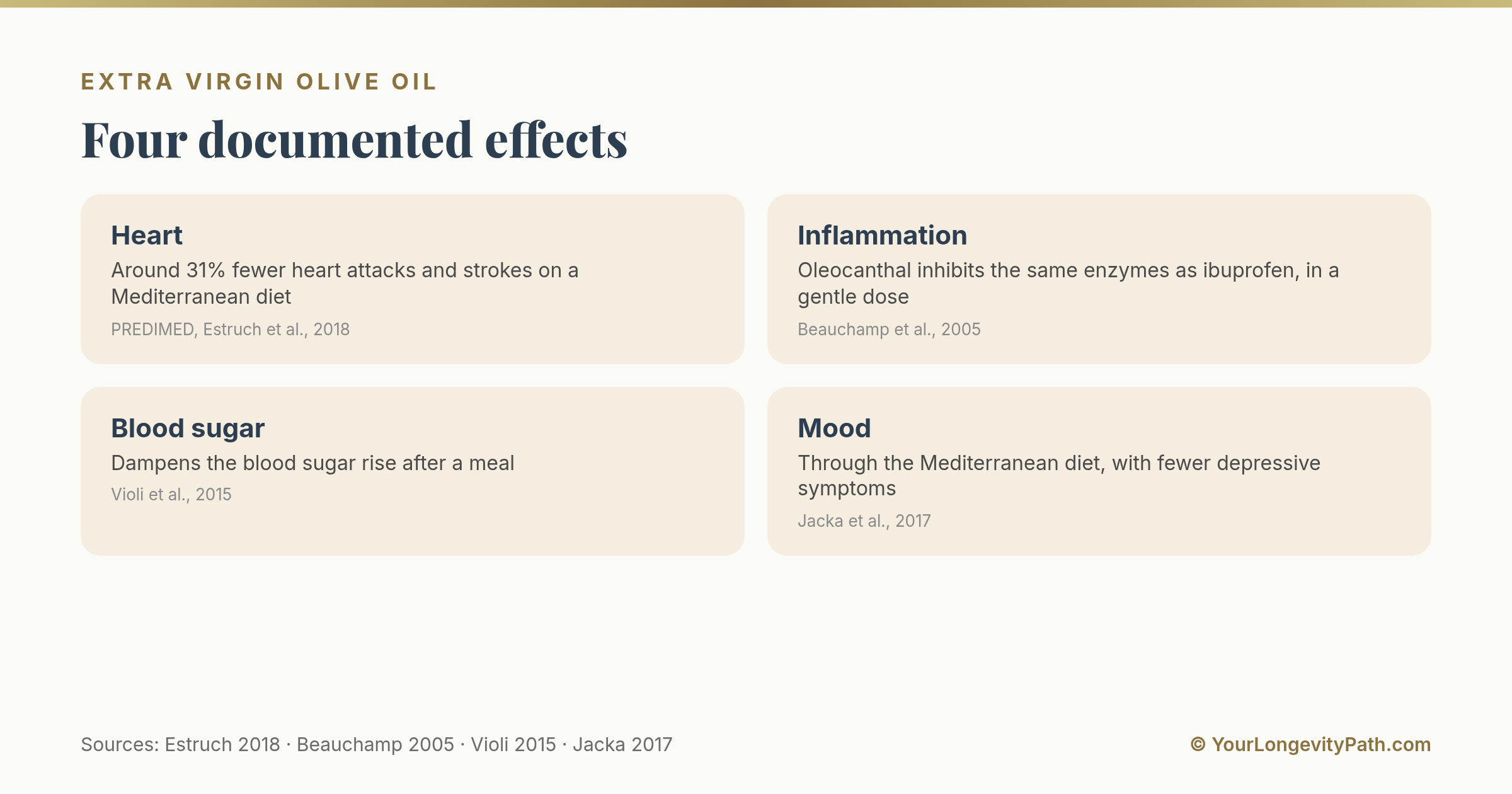 Fig. 1: Four documented effects of extra virgin olive oil (Estruch et al., 2018; Beauchamp et al., 2005; Violi et al., 2015; Jacka et al., 2017).
Oleocanthal: Why Good Olive Oil Scratches the Throat
There is a lovely discovery story behind this. The chemist Gary Beauchamp noticed at a conference in Sicily that fresh olive oil scratches and burns in the throat just like liquid ibuprofen. His team isolated the compound behind it and named it oleocanthal.
The result, published in the journal Nature: oleocanthal inhibits the same inflammatory enzymes (COX-1 and COX-2) as ibuprofen (Beauchamp et al., 2005). Before you throw out the painkillers: the amount in a normal serving of oil is far smaller than a painkiller dose. So olive oil is not a medicine.
What matters for longevity is something else: olive oil can lower silent, chronic inflammation over time. This low-grade inflammation, often called inflammaging, is considered one of the central drivers of aging. Keeping it low over the years slows one of the most important aging processes. A large long-term study from 2024 fits here: people who ate more than seven grams of olive oil per day had a 28 percent lower risk of dying from dementia over 28 years, independent of overall diet quality (Tessier et al., 2024).
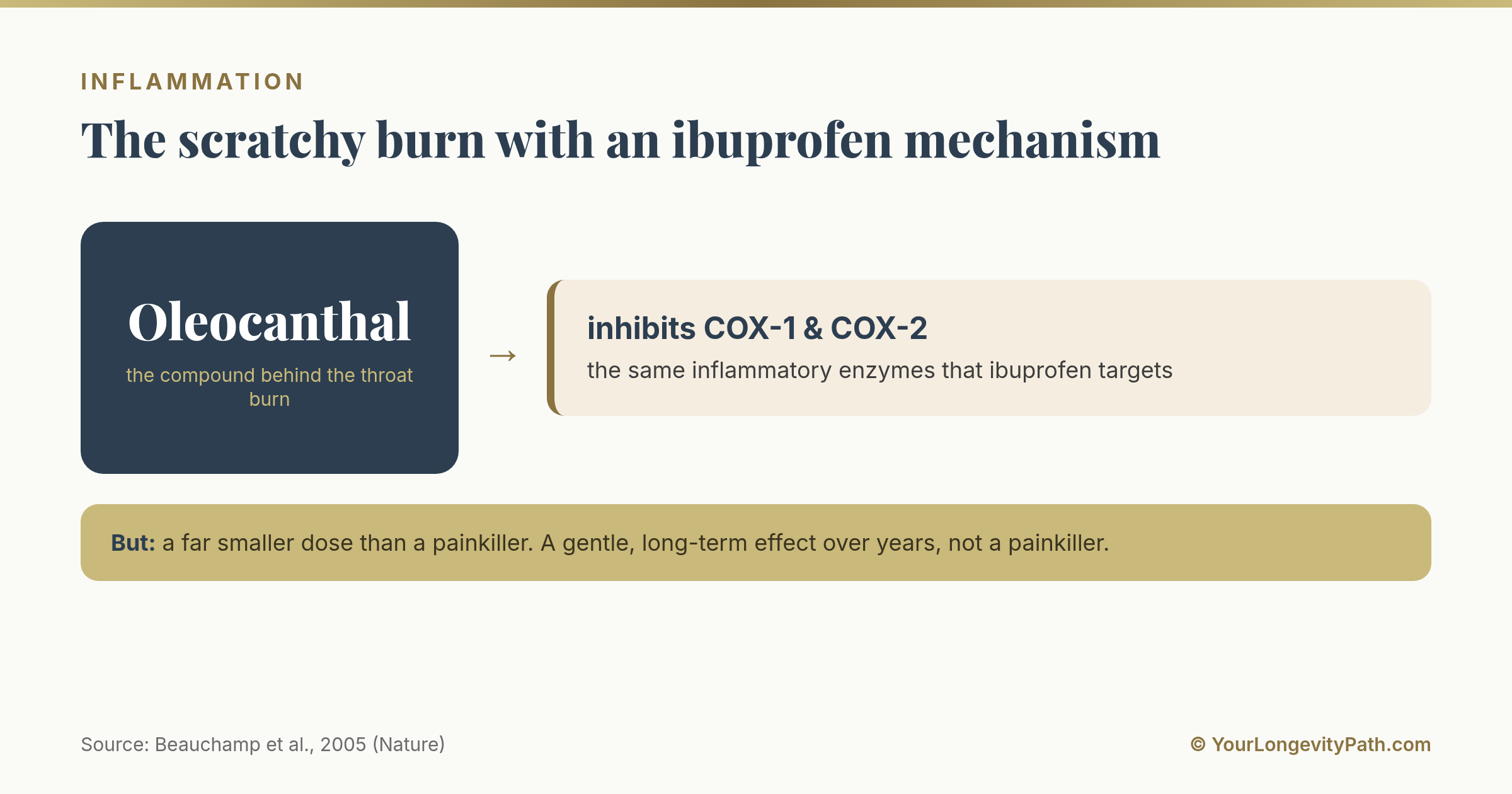 Fig. 2: Oleocanthal, the scratchy burn with an ibuprofen-like mechanism (Beauchamp et al., 2005).
What Olive Oil Does to Blood Sugar
One effect that is underestimated, especially in perimenopause, concerns blood sugar. In one study, just 10 grams of extra virgin olive oil (about a tablespoon) with a meal clearly lowered the blood sugar rise afterwards, compared with the same meal without the oil (Violi et al., 2015).
Why this matters: in perimenopause, insulin resistance rises in many women, so the body responds less well to the blood sugar hormone insulin. This encourages cravings, energy dips, and the stubborn weight gain around the middle. A drizzle of good olive oil over the meal is a simple lever that smooths blood sugar a little. How closely blood sugar, insulin, and hormones are linked is something I go into in the article on insulin resistance in perimenopause.
Mood and the Mediterranean Diet
Olive oil rarely comes alone. It is the key building block of a whole way of eating, and that is what makes the difference for mood.
The SMILES trial was the first to test this closely: people with depression who switched to a Mediterranean diet had markedly fewer depressive symptoms after twelve weeks than the comparison group, with 32 percent achieving full remission versus 8 percent (Jacka et al., 2017). In women around menopause, cross-sectional data suggest that more olive oil goes along with fewer psychological complaints (Vetrani et al., 2022). The likely mechanism runs through less inflammation and a healthier gut, which in turn helps steer mood.
Put in context: it is the whole diet that works, not the oil alone. Olive oil is the most important building block of it.
Why You Feel So Good in Olive Oil Countries
Back to the opening question. The good feeling on a Mediterranean holiday does not come out of a bottle. It comes from the whole package. Lots of vegetables and fish, fresh ingredients instead of ultra-processed ones. Plus sun, movement, shared meals, and a slower pace. I have written about the effects of sun and sea elsewhere.
In this picture, olive oil is the thread that connects almost everything, and one of the few building blocks you can take home one to one. That is what makes it so practical.
What Matters for Quality
And now the point that decides almost everything and that most people overlook: not every olive oil can do what is described here. The valuable polyphenols, including oleocanthal, are found mainly in extra virgin olive oil, cold-pressed and as fresh as possible. Refined oil, or oil sold as “mild,” has lost most of them.
How to recognize good oil:
- The burn in the throat. A good, polyphenol-rich oil scratches and burns slightly at the back of the throat and tastes bitter. This scratch is not a flaw, it is the oleocanthal. Mild, “smooth” oil is usually low in polyphenols.
- Extra virgin olive oil, not just “olive oil” or “mild.”
- Dark bottle, harvest date. Light and time destroy the polyphenols. A harvest date on the bottle is a good sign, and the fresher the better.
- Store cool and dark, not next to the stove.
A word on adulteration: the olive oil market is notorious for blending and label fraud. The scratchy burn is your best own test, and no label can fake it.
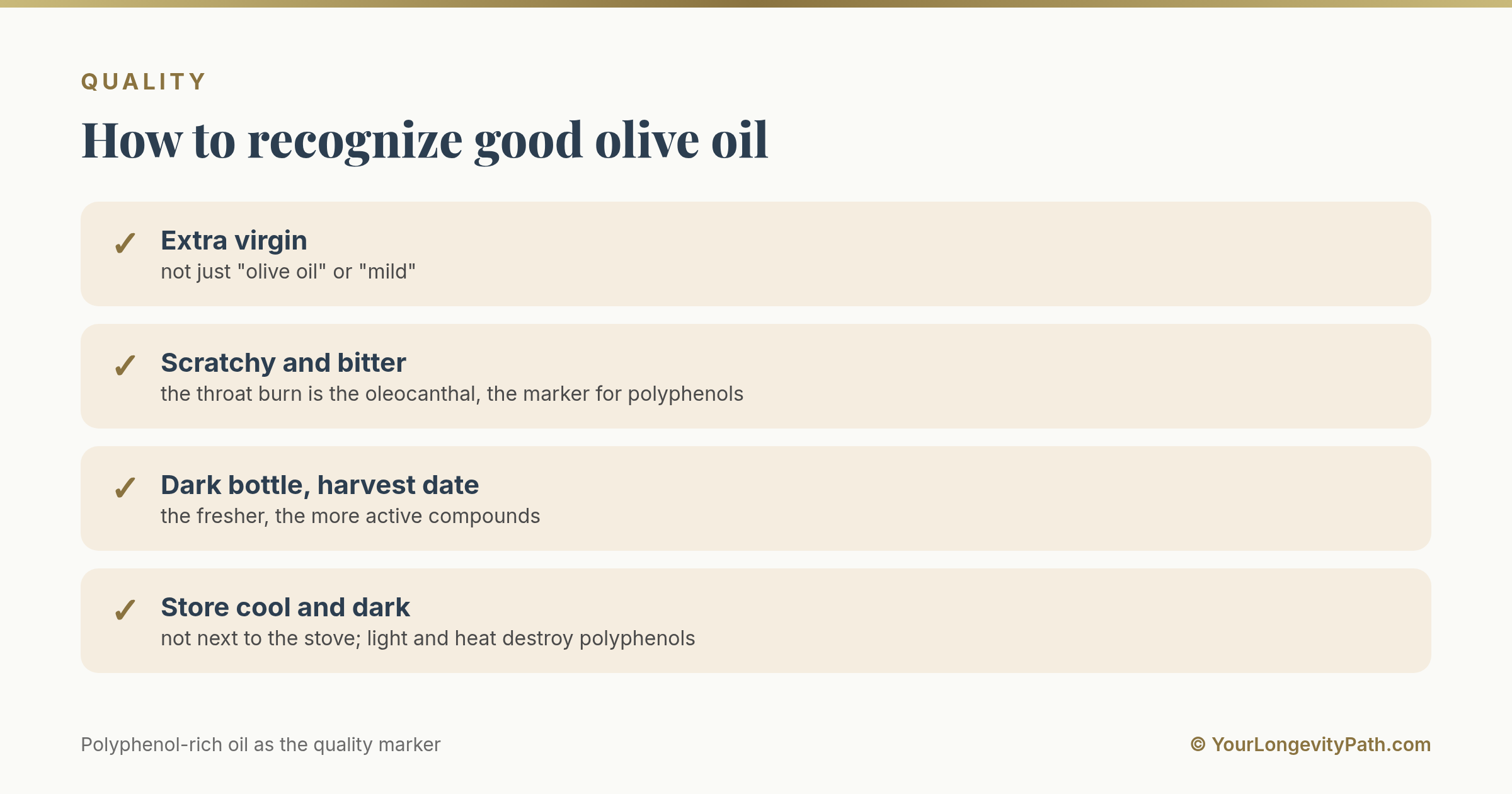 Fig. 3: Four signs of a good, polyphenol-rich olive oil.
What You Can Do
- Use it generously, raw. Over the finished dish, in salad, for dipping. That preserves the most polyphenols.
- Replace worse fats. Using extra virgin olive oil instead of margarine or refined vegetable oils brings the most.
- Watch for the burn. On your next purchase, deliberately go for bitter and scratchy, not mild.
- Use it with meals. A drizzle over the carb-rich meal smooths blood sugar.
- Buy fresh, store cool. Better small bottles with a harvest date more often than the cheap canister that sits open for a year.
The Bottom Line
Olive oil does not regulate hormones, and it is not a miracle oil. But it is one of the best-documented single building blocks of a healthy diet, and it supports several areas that need support in perimenopause: the heart, silent inflammation, blood sugar, and through the Mediterranean diet also mood.
You don’t get the Mediterranean feeling out of a bottle, but out of the whole lifestyle. Still, a good, scratchy extra virgin olive oil is the part of it you can bring into your everyday life most easily. As long as it is the right one.
Birgit
If you want to find out which nutrition levers make the biggest difference for you, my coaching for perimenopause provides the right framework, or you can start with a free initial consultation.
Scientific Sources
- Estruch R, Ros E, Salas-Salvadó J, et al. Primary prevention of cardiovascular disease with a Mediterranean diet supplemented with extra-virgin olive oil or nuts. N Engl J Med. 2018;378(25):e34. doi:10.1056/NEJMoa1800389
- Beauchamp GK, Keast RSJ, Morel D, et al. Phytochemistry: ibuprofen-like activity in extra-virgin olive oil. Nature. 2005;437(7055):45–46. doi:10.1038/437045a · PMID:16136122
- Violi F, Loffredo L, Pignatelli P, et al. Extra virgin olive oil use is associated with improved post-prandial blood glucose and LDL cholesterol in healthy subjects. Nutr Diabetes. 2015;5(7):e172. doi:10.1038/nutd.2015.23
- Jacka FN, O’Neil A, Opie R, et al. A randomised controlled trial of dietary improvement for adults with major depression (the ‘SMILES’ trial). BMC Med. 2017;15:23. doi:10.1186/s12916-017-0791-y
- Vetrani C, Barrea L, Rispoli R, et al. Mediterranean diet: what are the consequences for menopause? Front Endocrinol. 2022;13:886824. doi:10.3389/fendo.2022.886824
- Tessier AJ, Cortese M, Yuan C, et al. Consumption of olive oil and diet quality and risk of dementia-related death. JAMA Netw Open. 2024;7(5):e2410021. doi:10.1001/jamanetworkopen.2024.10021
Does olive oil really do anything for hormones?
Not directly. Olive oil doesn't regulate hormones, but it supports several areas that need support in perimenopause: it lowers silent inflammation (oleocanthal, Beauchamp et al., 2005), improves post-meal blood sugar (Violi et al., 2015), and protects the heart (PREDIMED, Estruch et al., 2018). The evidence doesn't promise more, but that is already a lot.
Is olive oil really anti-inflammatory like ibuprofen?
In the lab, its compound oleocanthal inhibits the same inflammatory enzymes as ibuprofen (Beauchamp et al., 2005). Important context: the amount in a normal serving is far smaller than a painkiller dose. It is a gentle, long-term effect over years, not a medicine.
Why do you feel so good on a Mediterranean holiday, is it the olive oil?
Partly. Olive oil is the key building block of the Mediterranean way of eating, and this pattern of vegetables, fish, fresh ingredients, and little ultra-processed food is linked to better mood and heart health (Jacka et al., 2017). Add sun, movement, and a slower pace. The oil is an important part, not a magic potion.
What should I look for when buying?
Extra virgin olive oil, as fresh and polyphenol-rich as possible. The tell-tale sign is the slightly scratchy, peppery burn at the back of the throat, which comes from oleocanthal. Dark bottle, harvest date, stored cool and dark. Refined or 'mild' oil has lost most of the valuable polyphenols.
Can I fry with extra virgin olive oil?
Yes, for normal pan-frying it is more stable than its reputation. But most polyphenols are preserved when you use it raw, over the finished dish, in salad, or for dipping. That is how you get the greatest health benefit.
This article is for informational purposes only and does not replace professional medical advice, diagnosis, or treatment. If you have health concerns, please consult a qualified healthcare professional.