Longevity Basics
You Drink Enough Water — So Why Is Your Skin Still Aging?
21 February 2026 · By Dr. B.J. Huber · 9 min read
You Drink Enough Water — So Why the Wrinkles?
Many people dutifully drink their two liters a day and still wonder about dry skin, fine lines, and wrinkles that seem to appear far too early. The standard advice is usually: drink more water, use moisturizer, don’t forget sunscreen. All important, but there is a critical factor missing from this equation: what happens when the water reaches your body but not your cells?
That is exactly where potassium comes in — a mineral that receives far too little attention in the longevity conversation.
- Only 2% of body potassium appears in serum — a normal blood test cannot detect intracellular deficiency where 98% of the mineral is stored, requiring whole blood or EXA analysis.
- Aquaporins (AQP3 water channels) in your epidermis depend on intracellular potassium gradients to function; without adequate potassium, cells dehydrate and wrinkles form regardless of water intake.
- The NIH Hydration Study found that chronic underhydration (marked by serum sodium >144 mmol/L) increases biological aging by 50% and premature mortality risk by 21%.6
Not All Hydration Is Created Equal
There is a fundamental difference between extracellular and intracellular hydration. Drinking water first fills the blood plasma and the space between cells (extracellular). For water to actually enter the cells, the body needs electrolytes, and the most important one is potassium.
Potassium is the dominant electrolyte inside cells. About 98 percent of the body’s total potassium is intracellular. The concentration there is roughly 140 mmol/L, nearly 40 times higher than in the blood, where it sits at just 3.5 to 5.5 mmol/L (Serum Potassium, NCBI Bookshelf). This concentration gradient is actively maintained by the sodium-potassium pump (Na+/K+-ATPase), an enzyme present in every single cell: for each ATP molecule consumed, it transports three sodium ions out and two potassium ions in.1
This is where aquaporins (specifically AQP3) play a starring role — microscopic water channels built into the cell membranes of your epidermis. Recent dermatological research shows that the function of these aquaporins depends heavily on intracellular electrolyte gradients. Without enough potassium inside the cell, the osmotic pull is missing, and these cellular channels cannot keep the tissue plump and functional.
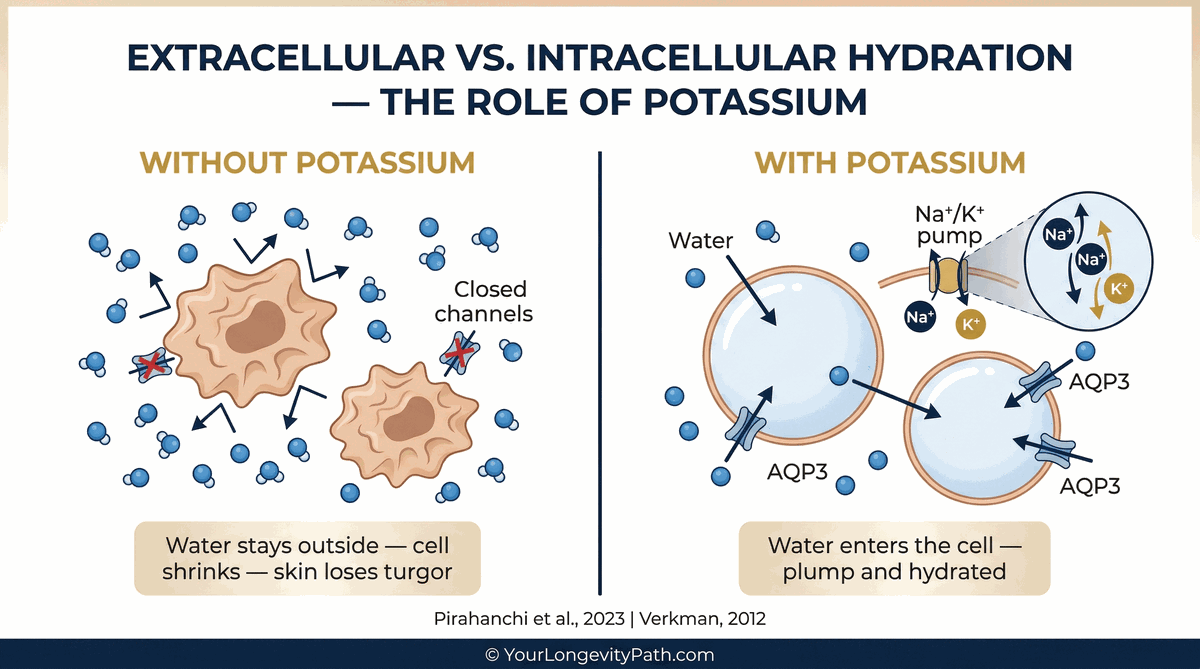 Fig. 1: Without potassium, water stays extracellular — with potassium, aquaporins (AQP3) open and the cell becomes fully hydrated.1,8
Why this matters for your skin: potassium draws water into the cell through osmosis. When intracellular potassium levels drop, the cell loses water and shrinks. The result at the skin surface: less turgor, less firmness, more wrinkles.
What the Research Shows About Skin Moisture and Wrinkles
A study by Choi et al. (2013) examined the relationship between skin elasticity, moisture content, and wrinkle formation. The results showed that drier skin had significantly more wrinkles, with deeper furrows and wider spacing between wrinkle lines. Skin moisture was an independent predictor of wrinkle formation, regardless of age.
Another study by Palma et al. (2015), published in Clinical, Cosmetic and Investigational Dermatology, found that higher water intake positively influenced skin physiology, particularly in people who previously drank little. However, even in this study, the effect of drinking water alone was limited. The authors suspected that the actual cellular uptake of water plays a role.
And that is exactly the point: without enough potassium, the water you drink cannot efficiently reach your skin cells. You hydrate the extracellular space, but the cells themselves remain relatively dry.
The Problem with Normal Lab Values
This is especially relevant for anyone who regularly checks their health markers: the serum potassium value in a standard blood panel is a poor indicator of the body’s actual potassium status.
The reason: only 2 percent of total body potassium is in the blood. In a 70 kg adult, that is roughly 60 mmol out of a total of about 3,010 mmol. This means the body can have substantial intracellular potassium losses while the serum value still looks perfectly normal (NCBI Bookshelf: Serum Potassium).
To put this in perspective: a drop in serum potassium of just 1.0 mmol/L already corresponds to a total body deficit of 200 to 300 mmol. But the serum value doesn’t even need to fall for a meaningful deficit to exist. The cells can already be undersupplied while the blood panel looks unremarkable.
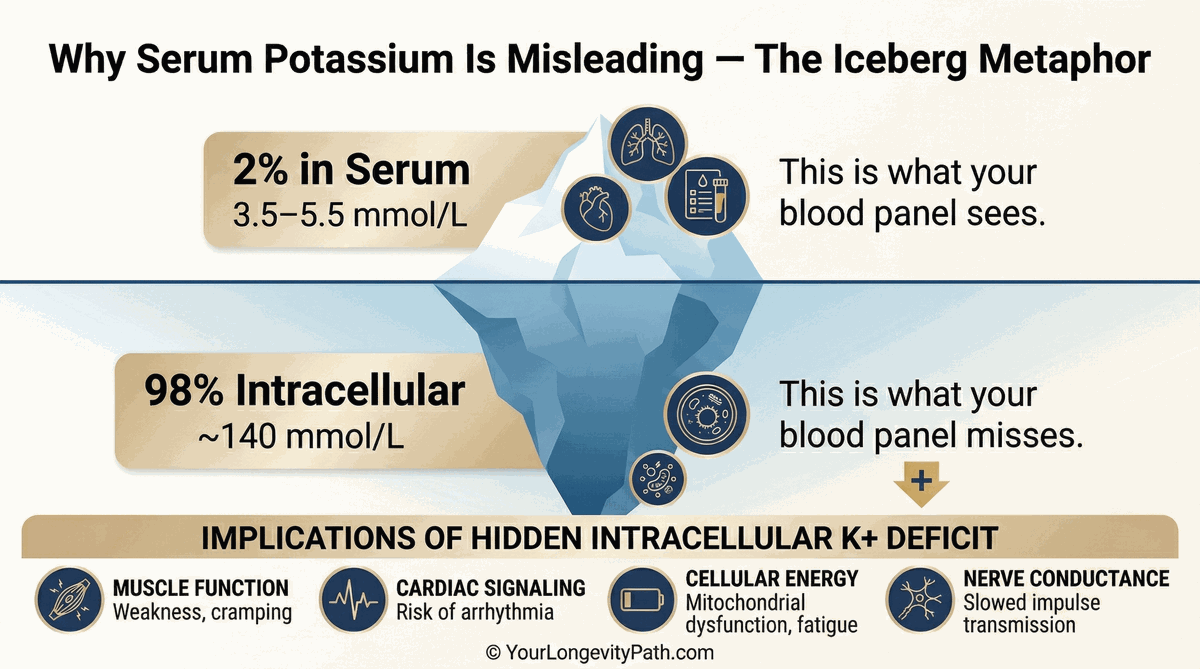 Fig. 2: The Iceberg Metaphor — only 2% of body potassium shows up on a blood panel. A normal serum value does not rule out an intracellular deficit (NCBI Bookshelf).
So when someone looks at their lab results, sees a potassium level of 4.0 mmol/L, and thinks “all good,” that number actually says very little about intracellular potassium status. Specialized tests such as intracellular mineral analysis (for example through whole blood analysis or EXA testing) can provide a more accurate picture.
Potassium and Longevity: The Connection
The link between potassium and longevity goes far beyond the skin. In fact, mineral status is one of the foundational levers in the broader longevity picture.
The Rancho Bernardo Study followed 1,363 older adults over 20 years. The finding: individuals with the lowest potassium intake had a 33 percent higher risk of all-cause mortality compared to the middle intake group (hazard ratio 1.33; 95% CI 1.06–1.67).5
The NIH Hydration Study by Dmitrieva et al. (2023) analyzed the ARIC cohort (n=11,255, 25 years of follow-up) and found that individuals with elevated serum sodium levels (above 144 mmol/L, a marker of chronic underhydration) had a 50 percent higher risk of being biologically older than their chronological age. They also had a 21 percent higher risk of premature death. Researcher Natalia Dmitrieva summarized: adequate hydration could slow the aging process and extend disease-free life.
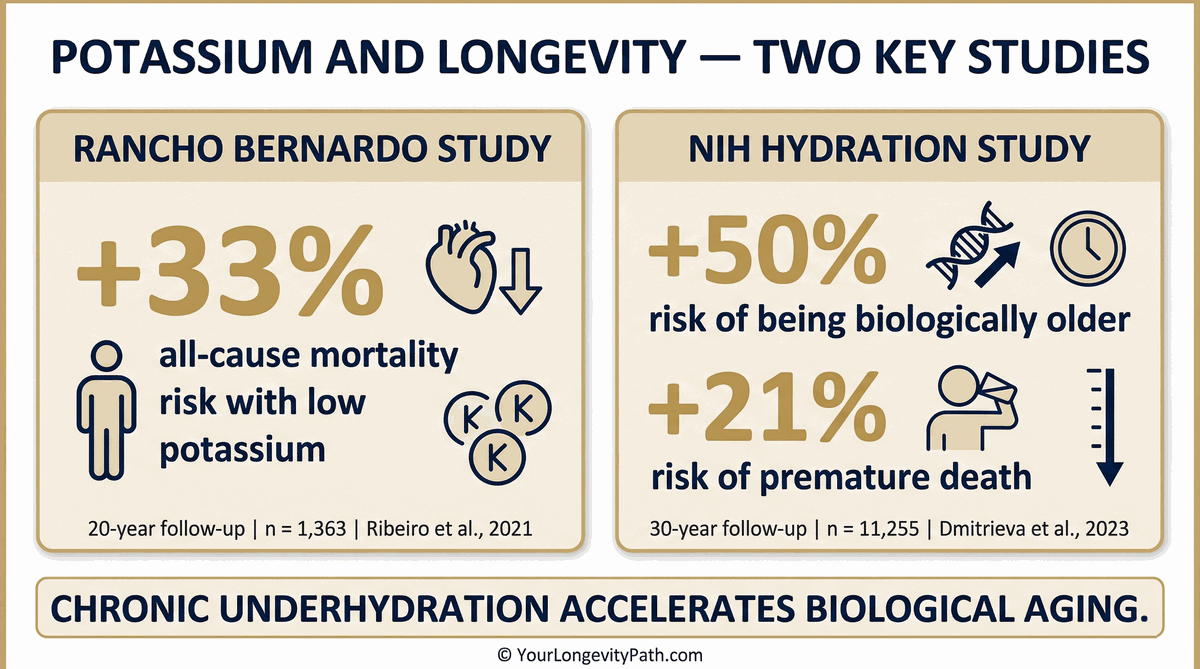 Fig. 3: Two key studies — low potassium increases mortality risk by 33%,5 chronic underhydration accelerates biological aging.6
What this has to do with potassium: chronic underhydration is not just about how much you drink, but also about how much water your cells actually absorb. And that is largely determined by the potassium-to-sodium ratio. A diet high in sodium (salt) and low in potassium shifts this ratio in favor of the extracellular space: the water stays “outside” instead of entering the cells.
Why So Many People Don’t Get Enough Potassium
The recommended daily potassium intake is 3,500 to 4,700 mg. Actual intake in Western countries falls well below that: studies show most adults only reach 2,000 to 3,000 mg per day.
The reasons go beyond quantity alone. What matters is not just how much potassium a food contains, but how much of it is actually absorbed. Many commonly cited plant-based potassium sources such as spinach, Swiss chard, and legumes also contain high levels of antinutrients: oxalates bind minerals in the gut, while phytates and lectins further impair absorption. The potassium density on paper says little about actual bioavailability.
The following sources provide highly bioavailable potassium without significant antinutrients: beef and lamb (approx. 300 to 460 mg per 100 g), wild salmon and halibut (approx. 400 to 530 mg per 100 g), avocados (approx. 500 mg per 100 g), sweet potatoes (approx. 540 mg per 100 g), and coconut water (approx. 250 mg per 100 ml).
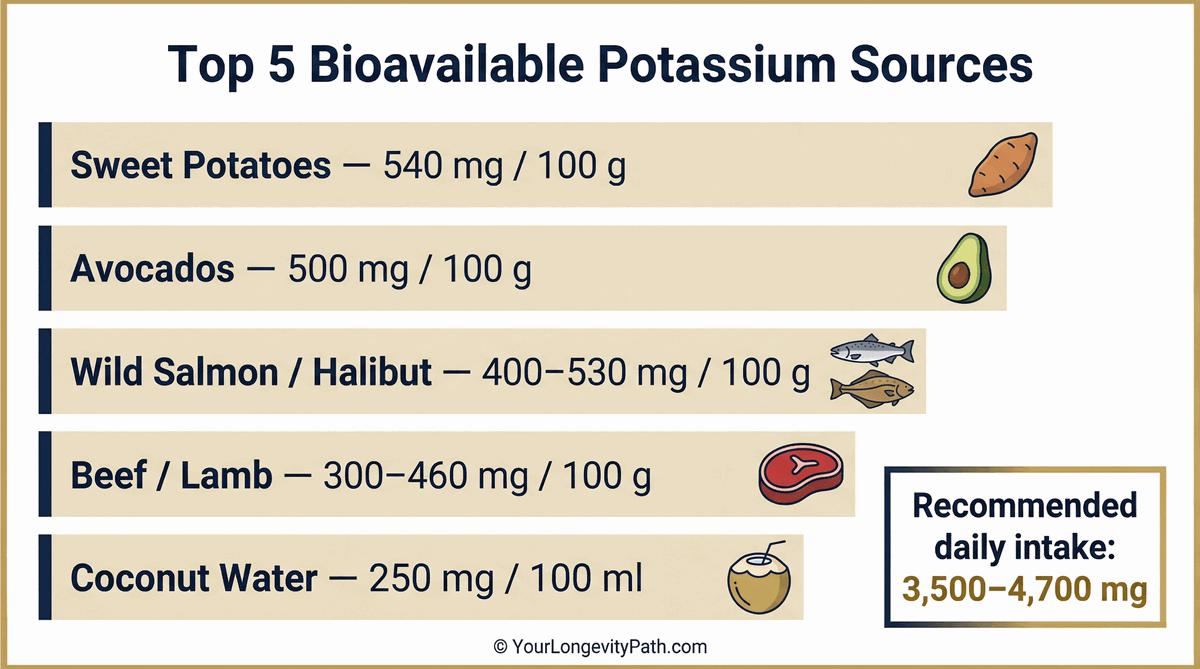 Fig. 4: The best bioavailable potassium sources — recommended daily intake: 3,500–4,700 mg.
At the same time, sodium intake from processed foods is typically too high, which further worsens the potassium-to-sodium ratio. Regularly including high-quality meat, fish, avocados, and sweet potatoes while reducing processed, sodium-heavy foods can significantly improve your potassium-to-sodium ratio.
What You Can Do About It
If you notice dry skin, fine lines, or poor skin elasticity despite drinking enough water, it is worth looking at your potassium status.
- Increase bioavailable, potassium-rich foods in your diet. High-quality meat, fish, avocados, and sweet potatoes are particularly good sources.
- Cut back on processed foods. They tend to be high in sodium and low in potassium, which throws off the ratio.
- Get your intracellular potassium tested. A normal serum potassium value on a blood panel does not rule out an intracellular deficit. Ask about whole blood mineral analysis.
- Don’t just drink water — pay attention to electrolytes. Especially after exercise or heavy sweating, water alone isn’t enough.
- Track the difference for yourself. If you increase your potassium intake while staying well hydrated, you will often notice the change in your skin within a few weeks.
The Bottom Line
Wrinkles are not just a matter of age and genetics. Cellular hydration plays a central role, and potassium is the key. If you drink plenty but take in too little potassium, you are essentially hydrating the space between your cells, not the cells themselves. Standard blood panels don’t catch this problem. And the consequences go far beyond the skin: a disrupted potassium-to-sodium ratio is associated with accelerated biological aging and increased mortality.
Longevity doesn’t start with expensive creams. It starts with what actually reaches your cells.
Hydration and minerals are one piece of the picture. We look at the rest together in my longevity coaching, or you can start with a free initial consultation.
Scientific Sources
- Pirahanchi, Y. et al. (2023). Physiology, Sodium Potassium Pump. StatPearls, NCBI Bookshelf. NBK537088.
- Choi, J. W., Kwon, S. H., Huh, C. H., Park, K. C., & Youn, S. W. (2013). The influences of skin visco-elasticity, hydration level and aging on the formation of wrinkles: a comprehensive and objective approach. Skin Research and Technology, 19(1), e349–e355.
- Palma, L. et al. (2015). Dietary water affects human skin hydration and biomechanics. Clinical, Cosmetic and Investigational Dermatology, 8, 413–421.
- Serum Potassium. Clinical Methods, NCBI Bookshelf. NBK307.
- Davitte, J., Laughlin, G. A., Kritz-Silverstein, D., & McEvoy, L. K. (2021). Dietary Potassium Intake and 20-Year All-Cause Mortality in Older Adults: The Rancho Bernardo Study. Journal of Nutrition in Gerontology and Geriatrics, 40(1), 46–57.
- Dmitrieva, N.I. et al. (2023). Middle-age high normal serum sodium as a risk factor for accelerated biological aging, chronic diseases, and premature mortality. eBioMedicine, 87, 104404.
- Hypokalemia. StatPearls, NCBI Bookshelf. NBK482465.
- Verkman, A. S. (2012). Aquaporins in clinical medicine. Annual Review of Medicine, 63, 303-316.
Why does my skin age despite drinking enough water?
Drinking fills blood plasma but not cells automatically. Without enough potassium, the sodium-potassium pump can't pull water into skin cells — regardless of how much you drink.
Does a blood test show real potassium deficiency?
No. 98% of potassium is intracellular. Serum levels often look normal even when cells are depleted. A whole-blood analysis is more informative.
Which foods provide the most potassium?
Potatoes, avocados, spinach, bananas, and legumes. Total daily intake matters most: current guidelines recommend 3,500 to 4,700 mg per day.
This article is for informational purposes only and does not replace professional medical advice, diagnosis, or treatment. If you have health concerns, please consult a qualified healthcare professional.